Double materiality between climate and business is deepening in real time. A scan of past headlines tells of rising public awareness of climate and nature issues, failing action and a capitalism increasingly unfit for the challenges it faces. If trends continue, businesses will be negatively impacted by chaos and will inevitably support transition to an alternative stabilising economic operating system, the shape of which is yet to be decided.
Over just 6 years, the narrative has shifted dramatically:
➡️ From: “Can capitalism solve the climate crisis?”
➡️ To: “Can capitalism even keep its own promises?”
➡️ To: “Can capitalism survive the climate crisis it helped create?”
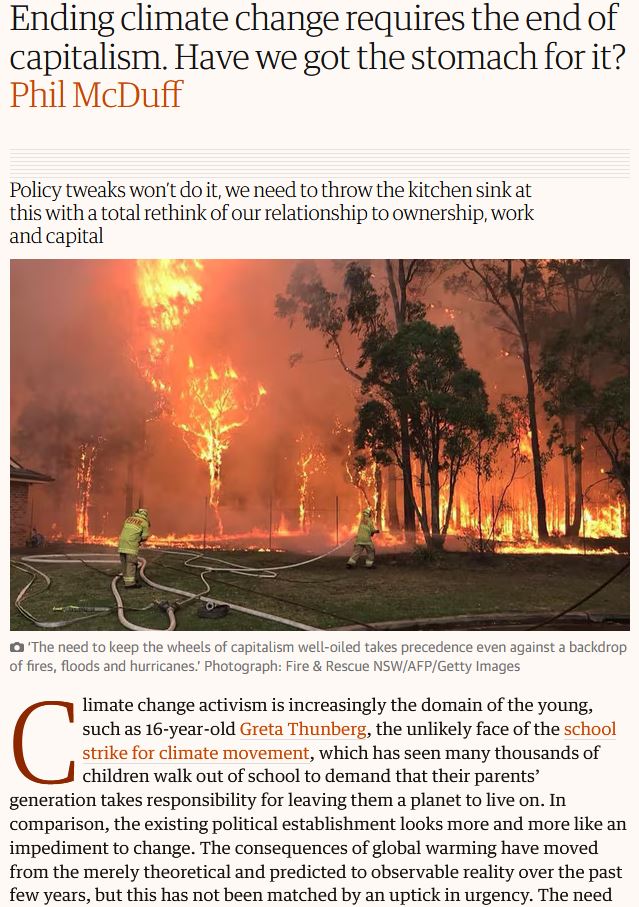
Mar 2019 – Phil McDuff: “Ending climate change requires the end of capitalism.” A radical position at the time—but one that captured the systemic scale of the crisis.
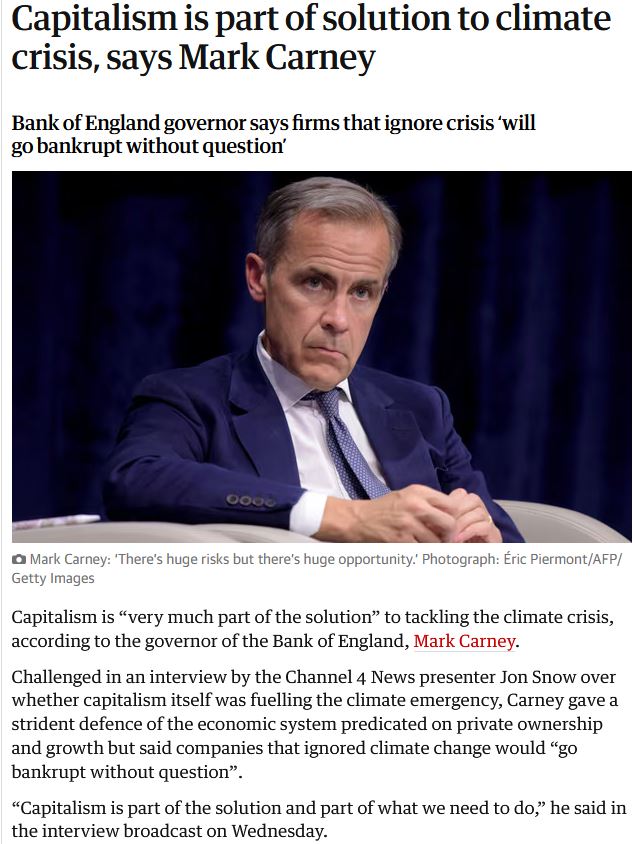
Mar 2019 – Mark Carney countered: “Capitalism is very much part of the solution.” With $120 trillion aligned to disclosure frameworks, hope surged that markets could correct course.
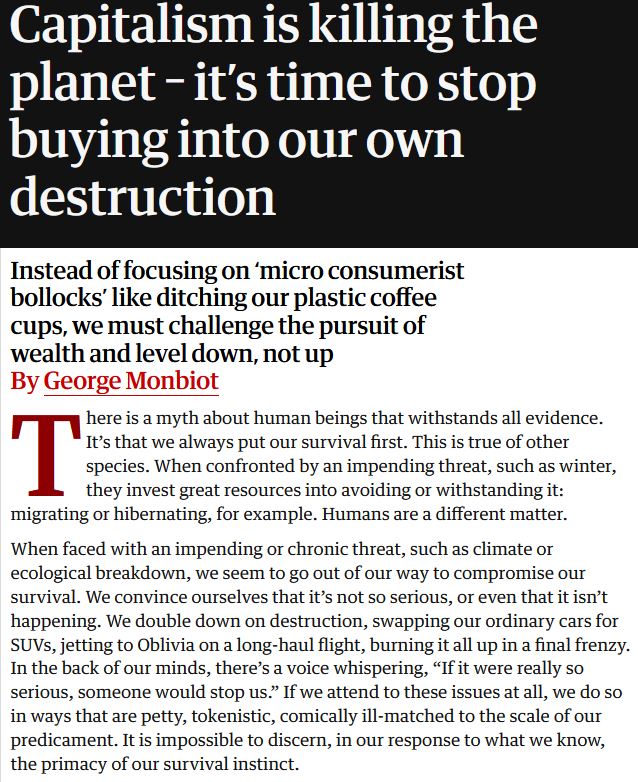
Mar 2019 – George Monbiot observed we weren’t correcting course, but doubling down on destruction—SUVs, long-haul flights and token fixes masking deep structural inertia.
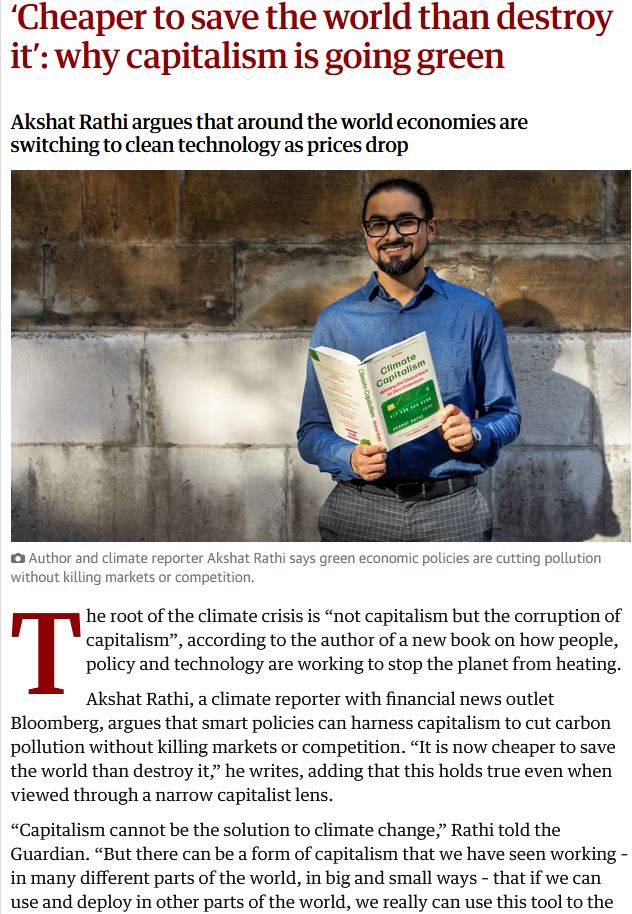
Mar 2019 – Akshat Rathi noted: “It’s now cheaper to save the world than destroy it.” But even he conceded it will take a different capitalism—not the one we currently rely on.
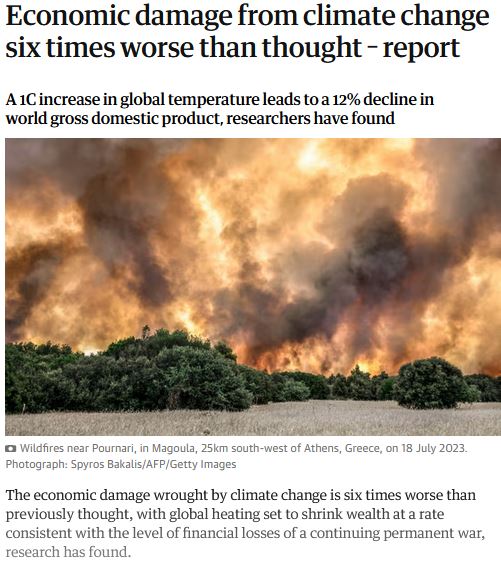
Mar 2019 – A landmark study found that a 1°C rise in temperature cuts global GDP by 12%. The damage rivals that of a permanent global war economy.
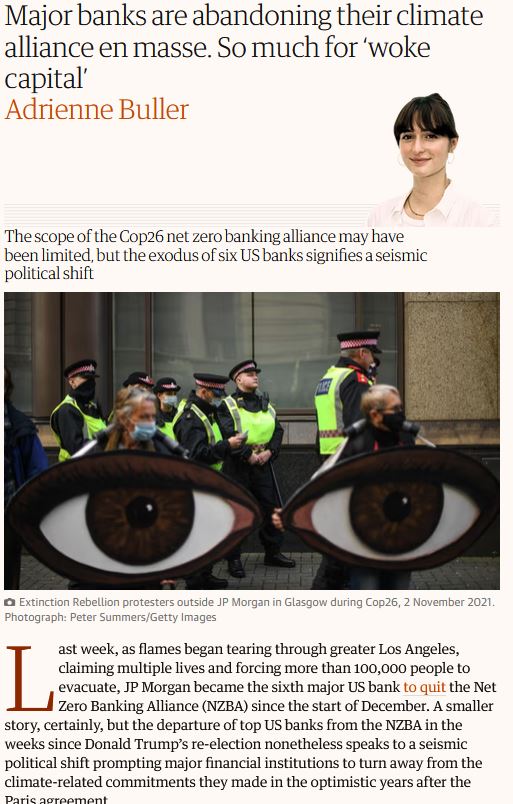
Mar 2019 – Adrienne Buller reported six major US banks—including JP Morgan—had exited the Net Zero Banking Alliance amid climate-fuelled fires in LA and political headwinds. Commitments made in optimism, abandoned in volatility.
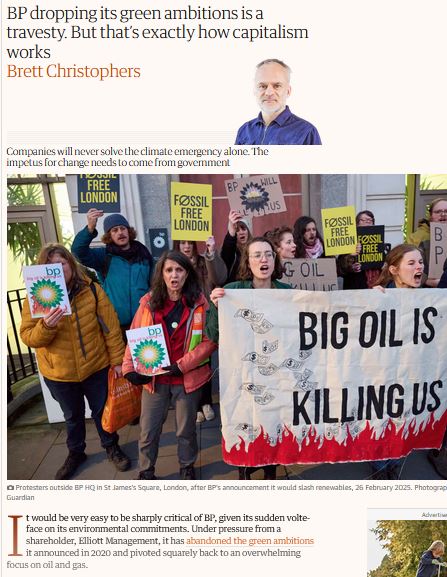
Mar 2019 – BP ditched its climate strategy under shareholder pressure. As Brett Christophers wrote: “This isn’t an exception. It’s how capitalism works.”
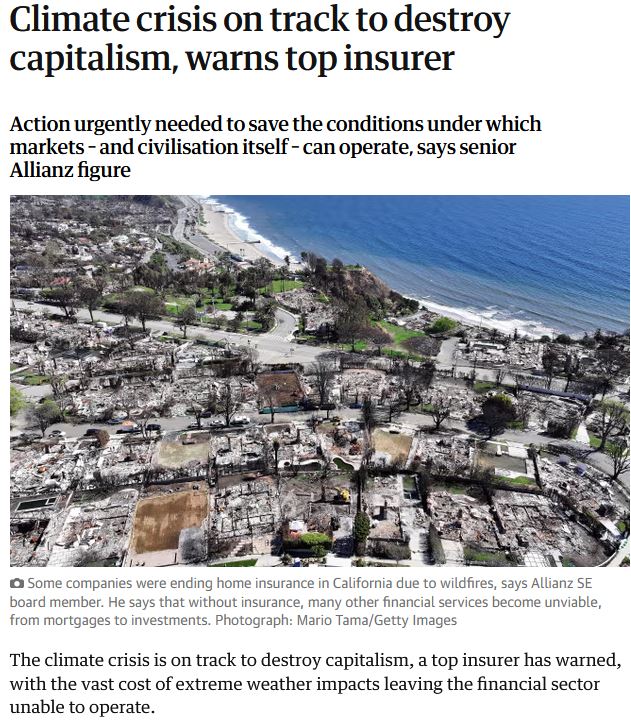
Mar 2019 – Günther Thallinger at Allianz, one of the world’s largest insurers, warned the climate crisis is on track to destroy capitalism itself, as entire sectors become uninsurable.
The economic case is clear AND we have the technology to resolve the climate crisis. But pace is lacking—capitalism moves too slowly, reacting only when disaster is fully priced in.
Meanwhile, the ‘other’ double materiality—between capitalism and the environment—has barely begun to be discussed. Unlike climate action, there are few technological silver bullets. Pace of change is the ONLY effective opportunity.
Capitalism has so far shown that it reacts late and there is a lack of evidence it can actually come through. Its current configuration is incompatible with desirable futures that any of us might hold.
For business leaders, the real question now is not whether capitalism will be reshaped—but how to build organisational resilience to that reshaping. It’s time to prepare not only for climate disruption, but for systemic economic transition.
Photo by Giu Vicente on Unsplash
 Heliocene