Businesses need stability; capitalism creates chaos

Double materiality between climate and business is deepening in real time. A scan of past headlines tells of rising awareness, failing action and a capitalism increasingly unfit for the challenges it faces. If trends continue, businesses will inevitably transition to an alternative stabilising economic operating system, the shape of which is yet to be decided. … Continue reading Businesses need stability; capitalism creates chaos

Prosperous economic activity, not growth

Every time you read, write or begin to say the phrase “economic growth”, swap it out for the phrase “economic activity”. It will cause you to think differently about what is being suggested. You’ll ask: economic activity involving whom, using what, doing what, to create what, to achieve what, for whom, and why? These are … Continue reading Prosperous economic activity, not growth

A Post-Growth Nature-Positive Aotearoa

An Oct 2024 report by EY NZ and WWF NZ, A Nature Positive Aotearoa, argues that a rapid, major boost to nature protection would contribute to long-term net GDP growth. However, there’s much in the report to support further thinking through a degrowth/post growth lens. NZ is in crisis with 66% of native forest, 90% … Continue reading A Post-Growth Nature-Positive Aotearoa

The Ill Logic of Addressing Climate Change to Save Growth While Growth Destroys Nature

The current global economic growth model is increasingly at odds with the environmental and climate realities we face. Tackling climate change in growth settings will inevitably result in nature losses, which are not being adequately accounted for—a recent BCG report being a prime example. Climate change solutionism generates false optimism, perpetuating the idea that economic … Continue reading The Ill Logic of Addressing Climate Change to Save Growth While Growth Destroys Nature

Post-Growth Science Explained

The timing could not be sweeter for a new paper—Post-growth: the science of wellbeing within planetary boundaries—from the leaders of post-growth thinking, providing an overview of the current research. With concerns rising that economic growth in high income nations is not sustainable, socially beneficial or even economically achievable, post-growth research is centred on replacing the … Continue reading Post-Growth Science Explained

A Change in Building, By Design

Housing has become an expensive asset and a key pillar of capitalism, where profitability reigns—leaving some people in substandard homes or without a home at all. Instead, the building industry needs to see itself as part of a system for provisioning shelter—satisfying a human need—rather than a developer of housing as an asset. This shift … Continue reading A Change in Building, By Design

NZCCBC24: Reflections through a Post-Growth Lens

The New Zealand Climate Change and Business Conference is targeted at business professionals working on climate issues. I was invited to present a post-growth economics and enterprise perspective in a panel on A Thriving Economy Within Planetary Boundaries. There was a flurry of social media posts during the conference, all positive, none challenging or critical. … Continue reading NZCCBC24: Reflections through a Post-Growth Lens

We Need Degrowth Energy Scenarios

Degrowth responds directly to climate change and other sustainability and wellbeing issues, affecting energy and resource use. It is crucial not to overlook it when developing climate scenarios for the energy sector. The Aotearoa New Zealand Ministry of Business, Innovation and Employment (MBIE) has released Electricity Demand and Generation Scenarios, July 2024, reinforcing mainstream assumptions … Continue reading We Need Degrowth Energy Scenarios

The Huge Water and Energy Costs of AI

Sustainability reports from Google and Microsoft indicate they are struggling on climate action, with both companies citing expansion of data centres for AI, which have high energy and water demands, coupled with a scarcity of renewable energy. Is AI so profitable they are willing to forego environmental goals? Or do they have no control over … Continue reading The Huge Water and Energy Costs of AI

SLIM Lifestyles: Narratives for Climate Models

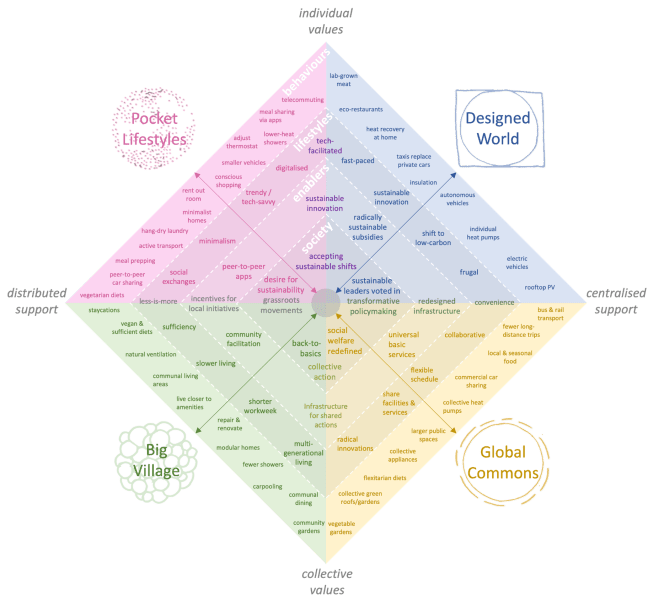
Narratives properly explaining the various approaches to sustainable lifestyles have been missing from climate modelling. Now, European researchers have developed the SLIM (Sustainable Living in Models) scenarios, offering four lifestyle narratives for long-term climate mitigation, designed to be easily incorporated into Integrated Assessment Models (IAMs). Previously, IAMs have used simplified assumptions (e.g. 100% vegan diets) … Continue reading SLIM Lifestyles: Narratives for Climate Models

The Heterogeneity of Affluence

There's a tendency in post-growth thinking to assume the global affluent are somewhat homogeneous. A study on global values reveals strong divergence, even in a modernising and globalising world, with the greatest divergence around emancipatory values. This has implications for advocating sustainability to affluent people around the world. Researchers Joshua Conrad Jackson and Danila Medvedev … Continue reading The Heterogeneity of Affluence

Growth is No Longer an Answer

In her recent address to the Auckland Business Chamber titled "Growth is the Answer", New Zealand Finance Minister Nicola Willis acknowledges low-growth projections, imploring businesspeople to lean in on the government’s growth agenda. However, this fails to grasp the essence of entrepreneurship, which is rooted in autonomy. Entrepreneurs are never in business to work for … Continue reading Growth is No Longer an Answer

A Survey of Perceptions of Degrowth in the European Parliament

A survey of MEPs by degrowth scholars Giorgos Kallis, Riccardo Mastini and Chritstos Zografos has uncovered some interesting data on opinions, shedding light on the growth dependency within institutions, such as the European Parliament, that makes them resistant to change, despite preferences for change within. Their paper in Nature describes how they looked at four … Continue reading A Survey of Perceptions of Degrowth in the European Parliament

Who is afraid of Degrowth? A brilliant graphic book by Céline Keller

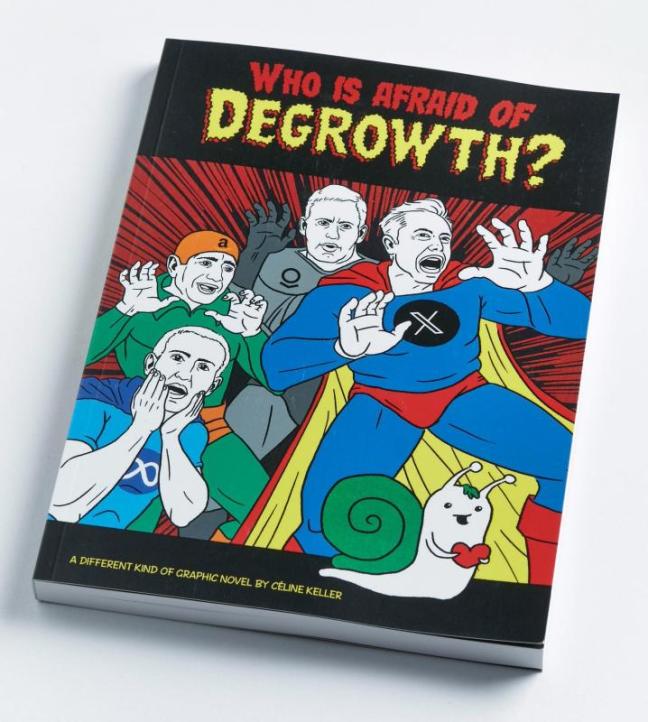
There is so much to love in this graphic book by Céline Keller smashing the myths about degrowth, filled with quotes from the who's who of both growth and degrowth worlds, juxtaposing their views and really exposing the absurdity of many of the ideas that are taken for granted and lauded as truths in the … Continue reading Who is afraid of Degrowth? A brilliant graphic book by Céline Keller

Setting Limits to Growth: a handbook for post-growth start-ups

"Setting Limits to Growth" is a new handbook for aligning start-ups and SMEs with post-growth thinking, based on a self-case study of its writers' own business, Post Growth Guide, a post-growth-aligned start-up educating about post-growth business. How's that for meta! Post Growth Guide (PGG) dovetails with founders' other business, an impact-led communications agency, enabling them … Continue reading Setting Limits to Growth: a handbook for post-growth start-ups

Who’s Publishing Business Degrowth Research?

The nascent trans-disciplinary topic of business degrowth must find a home where it can cross-pollinate to form new strands of management scholarship. Much of the literature in the field of degrowth lands in the Journal of Cleaner Production. But degrowth business management literature needs to land where business scholars can find it and engage with … Continue reading Who’s Publishing Business Degrowth Research?

De Gruyter Handbook of Degrowth

A rich, new tome on degrowth has just been published. Congrats to the eds and authors, some of whom I truly admire. But I have a big concern. Searching the book for the words 'business' and 'enterprise' to see how the authors tackle these, it appears that the degrowth community's strategy continues to involve criticising … Continue reading De Gruyter Handbook of Degrowth

Post-Growth Infrastructure: Let The People Decide

Infrastructure decision making needs to flow from community decision makers to financiers, not the other way round. Direct democracy models must ensure that communities have access to a diverse array of experts, including futurists in touch with realistic scenarios around sufficiently meeting the basic needs of future generations and the resources that would be fairly … Continue reading Post-Growth Infrastructure: Let The People Decide

Rethinking the Global Sustainability Agenda

Let's think about the sustainability agenda and goals such as eradicating hunger and poverty. Are they the right goals? By focusing on the effects, are we ignoring the causes and therefore the alternatives that we could be building? An article in Nature (4 July 2023) has pulled together some of the evidence pointing to the … Continue reading Rethinking the Global Sustainability Agenda