A Post-Growth Nature-Positive Aotearoa

An Oct 2024 report by EY NZ and WWF NZ, A Nature Positive Aotearoa, argues that a rapid, major boost to nature protection would contribute to long-term net GDP growth. However, there’s much in the report to support further thinking through a degrowth/post growth lens. NZ is in crisis with 66% of native forest, 90% … Continue reading A Post-Growth Nature-Positive Aotearoa

The Ill Logic of Addressing Climate Change to Save Growth While Growth Destroys Nature

The current global economic growth model is increasingly at odds with the environmental and climate realities we face. Tackling climate change in growth settings will inevitably result in nature losses, which are not being adequately accounted for—a recent BCG report being a prime example. Climate change solutionism generates false optimism, perpetuating the idea that economic … Continue reading The Ill Logic of Addressing Climate Change to Save Growth While Growth Destroys Nature

Post-Growth Science Explained

The timing could not be sweeter for a new paper—Post-growth: the science of wellbeing within planetary boundaries—from the leaders of post-growth thinking, providing an overview of the current research. With concerns rising that economic growth in high income nations is not sustainable, socially beneficial or even economically achievable, post-growth research is centred on replacing the … Continue reading Post-Growth Science Explained

We Need Degrowth Energy Scenarios

Degrowth responds directly to climate change and other sustainability and wellbeing issues, affecting energy and resource use. It is crucial not to overlook it when developing climate scenarios for the energy sector. The Aotearoa New Zealand Ministry of Business, Innovation and Employment (MBIE) has released Electricity Demand and Generation Scenarios, July 2024, reinforcing mainstream assumptions … Continue reading We Need Degrowth Energy Scenarios

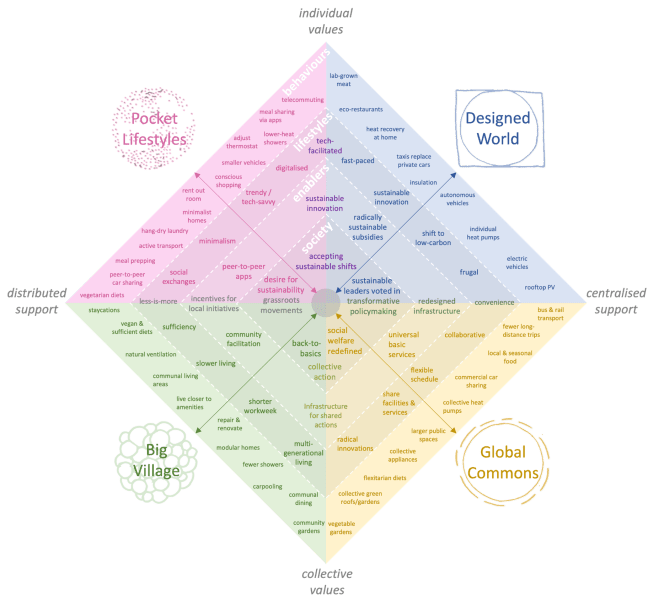
SLIM Lifestyles: Narratives for Climate Models

Narratives properly explaining the various approaches to sustainable lifestyles have been missing from climate modelling. Now, European researchers have developed the SLIM (Sustainable Living in Models) scenarios, offering four lifestyle narratives for long-term climate mitigation, designed to be easily incorporated into Integrated Assessment Models (IAMs). Previously, IAMs have used simplified assumptions (e.g. 100% vegan diets) … Continue reading SLIM Lifestyles: Narratives for Climate Models